What happened to Google’s URL shortener, goo.gl?
goo.gl was Google’s free URL shortener, and it has taken no new links since 2019. Google first said every goo.gl link would stop working after 25 August 2025, then on 1 August 2025 changed course and kept the links people were still clicking.
The Google link shortener stopped taking new links in two steps, which is why some answers say 2018 and others 2019: Google’s notice of 30 March 2018 said that from 13 April 2018 anonymous users, and anyone who had never made a short link, could no longer create new ones in the goo.gl console, and it gave existing users until 30 March 2019, the date it set for discontinuing the console and its APIs. Links made through Google’s own apps are the exception Google carved out: its July 2024 notice never names maps.app.goo.gl, but says “goo.gl links generated via Google apps (such as Maps sharing) will continue to function” (both notices read 23 September 2026).
If you came here to find out how to use the Google URL shortener, you can’t any more. Google has no shortener left for an ordinary web address; the “Shorten URL” box in Google Forms only shortens that form’s own link, and Google’s Forms help page describes no click report for it. The replacement steps below show how to recreate the goo.gl links you still need on a third-party shortener. If you just need a URL shortener still taking new links, a free LinkShortener.io account needs no card and allows 20 each month across links and QR codes, counting every click they get.
LinkShortener.io does what goo.gl did and adds what it never had. Shorten any URL, track every click on every plan, generate QR codes, put links on your own branded domain from $13/month and, on Pro ($34/month) and above, edit where a link points after you have shared it. A free account is required; no credit card is needed, and the free plan is not a trial that expires. Free links show no adverts, preview pages or countdowns, and we will not add any to links that already exist.
Who decides when a short link stops working?
With goo.gl, Google did. No service can promise to run for ever, but on LinkShortener.io you can see in advance what would stop a link working.
- The address. goo.gl links lived on Google’s domain. Here, whether your plan matters depends on the domain in the link. One made on our shared domain is unaffected by a cancellation or a downgrade to Free. One on a domain you own, from Basic ($13/month), redirects only while a paid plan is active, which matters most for a link you plan to print.
- The switch-off. A link stops sending visitors to its page if it is blocked for breaking our terms of use, for example after a report (anyone who follows it then sees a ‘link not found’ page).
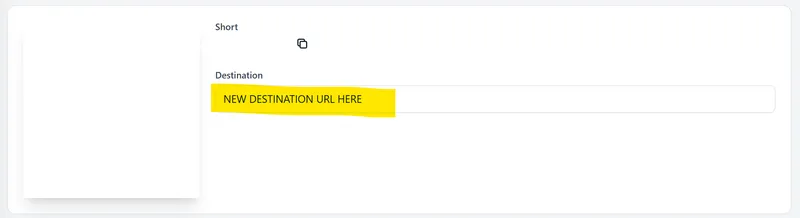
- The destination. A goo.gl link could never be re-pointed, so a moved page meant a dead link. Pro ($34/month) or higher lets you send an existing link to a new page after it has gone out on paper or online.