What should an agency check before choosing a short link tool?
Check what a printed board can do once the listing changes. A board often outlives its listing: the property goes under offer, sells, or comes back on the market when a chain collapses, and a portal address printed on it ends at a removed page once the listing is taken down. A link you can re-point avoids that.
Then check whose name the link carries. A board reading go.youragency.co.uk/12-elm-road puts the agency in front of everyone who stops to read it, where a shared short domain says nothing about who is selling. LinkShortener.io lets an agency print its own web address on boards from the Basic plan upwards. Our table of the best URL shorteners in 2026 sets six tools side by side on free allowance, click data and which plan adds your own domain.
Whether an agency needs any of this comes down to how much of its marketing is printed. Where a board outside the house and a card in the window carry the address, the artwork is fixed months before the listing’s status is. An agency that markets online only, sending buyers to pages on its own site that it can correct at source, has less at stake. Counted one link per property, a free account covers 20 in a month, and an agency taking on more instructions than that needs Basic, at $13 a month.
Following one board link from For Sale to Sold
One short link can carry a property from instruction to completion without the board being reprinted. In this example (go.youragency.co.uk/12-elm-road, a made-up address), choosing the ending and changing where the link points both need Pro ($34 a month).
- On instruction day, point the link at the listing on your own website. Before saving, add UTM tags such as utm_source=board to that listing address; they are passed through untouched, so your website analytics files board visitors under their own source instead of lumping them in with ‘direct’.
- Once the board is up, every scan, and every visit from someone who types the address off the board, is added to the link’s click and scan report.
- When a sale is agreed, send the link to a ‘register for similar homes’ page, so late scanners become applicants instead of finding a listing marked sold.
- If the sale falls through, point it straight back at the listing. The board never came down, so nothing needs reprinting.
- After completion, point it at a valuation page for the neighbours. In England the advertisement regulations give you 14 days from completion to take the board down, and many scans in those days are likely to come from neighbours who have just watched a house on their street sell.
Each of those moves is one change to the Destination field, shown below. The printed code and the /12-elm-road ending stay exactly as they are.
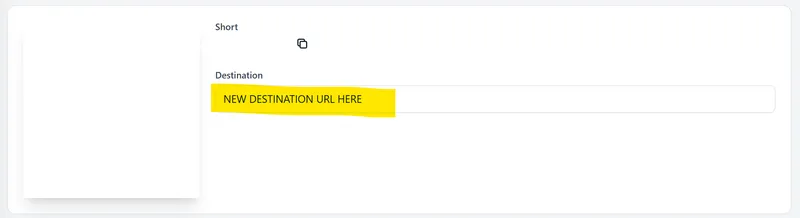
That only holds while the domain stays live. The Elm Road code answers on go.youragency.co.uk for as long as the agency pays for a plan that includes that domain. Cancel the paid plan or move down to Free and every board printed with the agency address stops resolving; codes made on the shared tli.sh address are the ones that outlast a cancellation.
What can you show a vendor at the two-week review?
You can show where the interest is coming from and when it arrives. Give the board, the window card and the printed particulars different links, and each keeps its own count, which separates passers-by outside the house from browsers at your window and people who took the brochure home.
For timing, use the report’s busiest hours and days. The report gives hours in UTC, so between late March and late October add an hour before you tell a vendor that board scans peak at 7pm.
Then set those times against viewings booked. If most board scans land on weekday evenings and at weekends, while the office is shut, buyers are looking outside viewing hours, which argues for later slots or a Saturday open house. Plenty of scans but few viewings moves the conversation to price or photos; few scans on a busy road moves it to where the board stands.